





Cuentas corrientes vs. cuentas de ahorro: ventajas, desventajas y mejores usos

Si vas a abrir tu primera cuenta bancaria, probablemente ya te hayas encontrado con la pregunta: ¿cuenta corriente o de ahorros?
La respuesta corta es que las cuentas corrientes están diseñadas para gastar y las cuentas de ahorros para hacer crecer tu dinero. Pero la imagen completa es más compleja. Sound Credit Union, Sabemos que comprender cómo funciona cada cuenta puede ayudarte a tomar decisiones más inteligentes desde el primer día.
En esta guía, te explicaremos en detalle cómo se comparan las cuentas corrientes y las de ahorro: qué hace cada una, sus ventajas y desventajas, cuándo debes usar una u otra y cómo encontrar las cuentas adecuadas cuando estás empezando.
¿Qué es una cuenta corriente?
A cuenta de cheques Es la cuenta que usas para tus finanzas diarias. Piensa en ella como el centro de tu dinero: allí recibes tu sueldo, pagas tus facturas y usas tu tarjeta de débito en el supermercado.
Las cuentas corrientes están diseñadas para transacciones frecuentes. Puedes realizar depósitos y retiros ilimitados, y el dinero siempre está disponible a través de tu tarjeta de débito, aplicación móvil, cajero automático o pago de facturas en línea. La mayoría de las cuentas corrientes no generan intereses (o generan muy pocos), porque ese no es el objetivo principal, sino la accesibilidad.
Usos típicos de una cuenta corriente:
- Recibir tu nómina mediante depósito directo
- Pago de facturas mensuales (alquiler, servicios públicos, suscripciones)
- Realizar compras con tarjeta de débito
- Retirar efectivo en cajeros automáticos
- Enviar dinero a través de la banca en línea o móvil.
- Escribir cheques
¿Qué es una cuenta de ahorros?
A cuenta de ahorros Está diseñada para guardar dinero que no planeas gastar de inmediato. La característica principal de una cuenta de ahorros es que genera intereses (llamados dividendos en las cooperativas de crédito) sobre tu saldo, por lo que tu dinero crece con el tiempo simplemente por estar ahí.
Usos comunes de las cuentas de ahorro
- Construyendo un fondo de emergencia
- Ahorrar para un objetivo específico (coche, vacaciones, entrada para una vivienda)
- Reservar dinero que no quieras gastar accidentalmente
- Obtener rentabilidad sobre dinero que no necesitarás a corto plazo.
Cuentas corrientes vs. cuentas de ahorro: las principales diferencias a simple vista
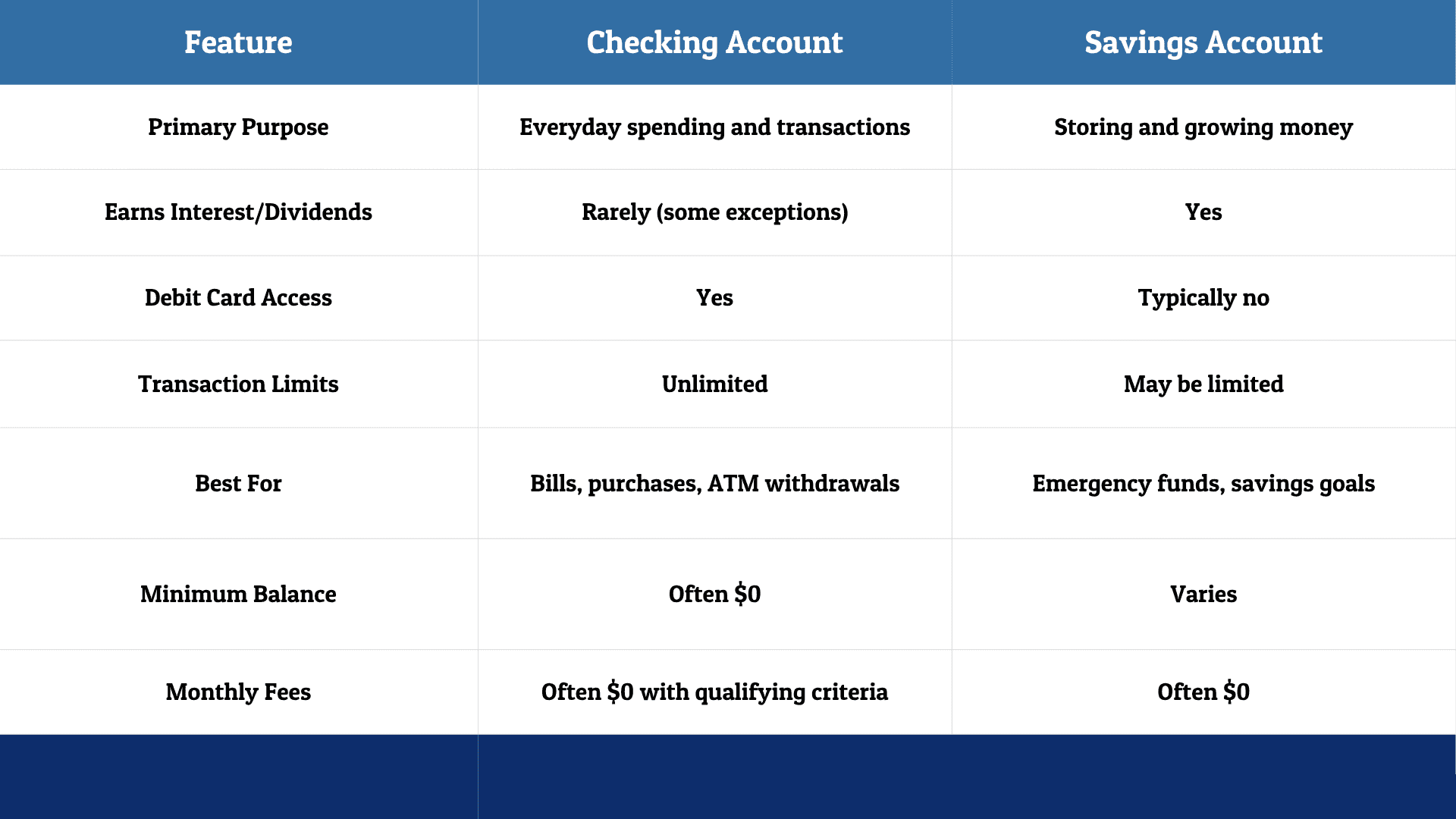
Ventajas y desventajas de las cuentas corrientes
Beneficios de las cuentas corrientes
- Acceso fácil e instantáneo a tu dinero: Las cuentas corrientes están diseñadas para ofrecer liquidez. Tu dinero está disponible en el momento en que lo necesitas, ya sea para comprar alimentos, pagar una factura o retirar efectivo de un cajero automático.
- Tarjeta de débito y pago móvil: La mayoría de las cuentas corrientes incluyen una tarjeta de débito que funciona en cualquier lugar donde se acepten tarjetas. Muchas también son compatibles con billeteras móviles como Apple Pay y Google Pay, para que puedas dejar la tarjeta física en casa.
- Depósito directo: Puedes recibir tu cheque de pago directamente en tu cuenta corriente, a menudo llegando antes de tu fecha de pago oficial cuando tu cooperativa de crédito te apoya. características de pago anticipado.
- Sin límites de transacción: A diferencia de las cuentas de ahorro, las cuentas corrientes no limitan la cantidad de veces que puedes ingresar o retirar dinero. Esto las hace ideales para cuentas donde necesitas acceso frecuente.
- Pago de facturas y transferencias en línea: Las cuentas corrientes se integran con banca en línea y móvil herramientas que facilitan el pago automático de facturas, la configuración de transferencias y la gestión de su dinero sin necesidad de acudir a una sucursal.
- Asegurado por NCUA/FDIC: En cooperativas de crédito aseguradas por el gobierno federal como Sound Credit Union, El saldo de su cuenta corriente está asegurado por la NCUA hasta $250,000, por lo que su dinero está protegido.
Desventajas de las cuentas corrientes
- Se generan pocos o ningún interés: La mayoría de las cuentas corrientes no generan intereses significativos sobre el saldo. Si mantienes una gran cantidad de dinero en tu cuenta corriente, probablemente estés perdiendo las ganancias que podrías obtener en una cuenta de ahorros.
- Es fácil gastar de más: La misma accesibilidad que facilita el uso de las cuentas corrientes también puede hacer que gastes fácilmente el dinero que tenías reservado para otra cosa. Sin controles, el saldo de tu cuenta corriente puede disminuir más rápido de lo esperado.
- Costes potenciales: Algunas cuentas corrientes cobran comisiones mensuales de mantenimiento, comisiones por sobregiro o comisiones por uso de cajero automático si no se cumplen ciertos requisitos. Es recomendable leer la letra pequeña antes de abrir cualquier cuenta.
Ventajas y desventajas de las cuentas de ahorro
Beneficios de las cuentas de ahorro
- Tu dinero genera dividendos: La mayor ventaja de una cuenta de ahorros es que tu saldo crece con el tiempo. Los intereses se capitalizan sobre tus depósitos, lo que significa que ganas dividendos no solo sobre el dinero que depositas, sino también sobre los intereses ya acumulados.
- Incentivo incorporado para ahorrar: La naturaleza de acceso restringido de las cuentas de ahorro crea una barrera natural entre usted y el gasto impulsivo. Esa resistencia es, de hecho, una ventaja: facilita dejar el dinero tranquilo y permitir que crezca.
- Ahorro orientado a objetivos: Tener una cuenta de ahorros separada facilita separar mentalmente (y literalmente) el dinero que estás reservando para un propósito específico, ya sea un fondo de emergencia, unas vacaciones, un coche o una entrada para una vivienda.
- Asegurado por NCUA/FDIC: Al igual que las cuentas corrientes, las cuentas de ahorro en instituciones aseguradas por el gobierno federal están protegidas hasta $250,000 a través de la NCUA.
- Requisitos de saldo mínimo bajos o inexistentes: Muchas cuentas de ahorro, incluida la cuenta Prime Savings de Sound Credit Union, tienen requisitos de saldo mínimo bajos o nulos, lo que las hace accesibles para las personas que recién comienzan a ahorrar.
Desventajas de las cuentas de ahorro
- Menos accesible que comprobar: No puedes usar una tarjeta de débito vinculada a una cuenta de ahorros en una tienda. Si necesitas acceder a tus ahorros, normalmente tendrás que transferir el dinero primero a tu cuenta corriente, lo que añade un paso.
- Pueden aplicarse límites a las transacciones: Algunas cuentas de ahorro limitan la cantidad de retiros que puedes realizar por mes. Si bien esto se debe en parte a su diseño, puede resultar inconveniente si necesitas acceder a tus fondos con frecuencia.
- Tasas de interés más bajas en cuentas estándar: Una cuenta de ahorros básica genera intereses, pero la tasa de una cuenta de ahorros estándar puede ser modesta. Si hacer crecer su dinero es una prioridad, una opción de ahorro de alto rendimiento (como una Cuenta del mercado monetario) puede que te sea más útil.
Cuándo usar una cuenta corriente
Tu cuenta corriente es para el dinero que vas a gastar. Úsala para:
- Compras diarias: Siempre que realices una compra, ya sea en una tienda, en línea o mediante una suscripción, tu cuenta corriente y tu tarjeta de débito son las herramientas adecuadas.
- Pago de facturas: Configura pagos automáticos para el alquiler, los servicios públicos, los seguros y las suscripciones para que se debiten de tu cuenta corriente sin que tengas que preocuparte por ello.
- Recepción de depósito directo: Haz que tu empleador deposite tu nómina directamente en tu cuenta corriente. Algunas cooperativas de crédito, como Sound Credit Union, ofrecen el servicio de Pago Anticipado, que te permite recibir tu depósito directo hasta dos días antes de la fecha oficial de pago.
- Retiros en cajeros automáticos: Cuando necesitas efectivo, lo obtienes de tu cuenta corriente.
- Transferencias a cuentas de ahorro: Una estrategia común consiste en usar la cuenta corriente como punto de partida: el dinero llega mediante depósito directo y se transfiere inmediatamente una cantidad fija a la cuenta de ahorros antes de tener la oportunidad de gastarla.
Cuándo usar una cuenta de ahorros
Tu cuenta de ahorros es para el dinero que guardas. Úsala para:
- Tu fondo de emergencia: La mayoría de los expertos financieros recomiendan tener entre tres y seis meses de gastos de manutención en un fondo de emergencia de fácil acceso. Una cuenta de ahorros es ideal para esto: genera intereses mientras la mantienes, pero puedes acceder a ella cuando surja un gasto inesperado.
- Objetivos a corto y mediano plazo: ¿Ahorrando para las vacaciones del año que viene? ¿Para un coche nuevo en dos años? Una cuenta de ahorros te permite reservar fondos y ver cómo crecen con intereses mientras trabajas para alcanzar esos objetivos.
- Dinero que no quieres gastar por accidente: Mantener los fondos sobrantes en una cuenta de ahorros, separada de tu cuenta corriente, reduce la probabilidad de que gastes el dinero que debías haber ahorrado.
- Fondos de alto saldo que desea hacer crecer: Si tiende a mantener un saldo más alto, una opción de ahorro de alto rendimiento como una Cuenta del mercado monetario puede poner ese dinero inactivo a trabajar obteniendo una tasa de retorno significativamente mayor.
¿Necesitas una cuenta corriente y una cuenta de ahorros?
Para la mayoría de la gente, sí, y con razón.
Las cuentas corrientes y de ahorro tienen propósitos diferentes, y usarlas juntas crea un sistema natural para administrar tu dinero. El método típico es el siguiente: tus ingresos van a tu cuenta corriente, cubres tus gastos habituales con ella y transfieres una parte a tu cuenta de ahorros con cada pago. Con el tiempo, ese saldo de ahorros crece y, como está en una cuenta separada, se mantiene independiente del dinero que gastas a diario.
Esto no es solo un consejo de finanzas personales, sino que así es como la mayoría de las personas con buenos hábitos financieros operan. El simple hecho de transferir dinero al ahorro, incluso de forma automática, crea una separación psicológica que facilita dejarlo intacto.
En Sound Credit Union, abrir un cuenta de ahorros En realidad, es el primer paso para convertirse en miembro y desde ahí, puede agregar de cheques, certificados, tarjetas de crédito, y préstamos Todo con una sola membresía. Tener todo en un solo lugar facilita las transferencias entre cuentas, el seguimiento de tus saldos y el logro de tus objetivos.
Cómo elegir la cuenta adecuada para ti
Aquí tienes un marco sencillo para decidir qué cuenta (o combinación de ellas) es la adecuada para tu situación:
- Eres nuevo en el mundo de la banca y solo necesitas un punto de partida: Abrir un Cuenta de ahorros Prime (que establece tu membresía Sound) y agrega una cuenta corriente gratuita. Esto te brinda la base sin lujos ni comisiones que la mayoría de la gente necesita.
- Usted usa su tarjeta de débito constantemente: Cuenta corriente con reembolso en efectivo Te devuelve dinero cada vez que pagas con tarjeta. Combínala con una cuenta de ahorros Prime para mantener tus gastos separados de tus ahorros.
- Mantienes un saldo más alto en la cuenta corriente: Una cuenta corriente con intereses significa que ese saldo genera ganancias. Es una mejora sencilla que hace que tu cuenta corriente sea un poco más rentable.
- Lo que más desea evitar son los cargos por sobregiro: La cuenta de débito Sound fue diseñada para esto. Es sencilla, clara y te protege de los cargos por sobregiro.
- Estás creando un fondo de emergencia o trabajando para alcanzar una meta: Una cuenta de ahorros Prime es el lugar para comenzar. Si su saldo crece con el tiempo, considere actualizarla a la Cuenta del mercado monetario de alto rendimiento para obtener una mejor tarifa.
- Tienes una suma de dinero que no tocarás por un tiempo: A Cuenta de certificado Garantiza una tasa de interés fija y puede ofrecer un rendimiento significativamente superior al de una cuenta de ahorros estándar. Solo asegúrese de sentirse cómodo sin acceder a esos fondos hasta que finalice el plazo.
Abre tu primera cuenta en Sound Credit Union.
Si eres residente del estado de Washington y estás listo para abrir tu primera cuenta, Sound Credit Union Es muy sencillo, todo el proceso lleva unos cinco minutos online.
Esto es lo que necesitarás:
- Un documento de identidad válido con fotografía (licencia de conducir, pasaporte o documento de identidad estatal).
- Su número de Seguro Social o número de identificación fiscal de EE. UU.
- Una dirección postal física
Tu membresía comienza con un Cuenta de ahorros Prime. Desde ahí, puedes añadir un cuenta de cheques, solicitar un tarjeta de crédito, explorar opciones de certificado, y mucho más, todo dentro de la misma membresía.
También te puede interesar…

Líder empresarial: Maestros constructores de Olympia
Olympia Master Builders invierte en la construcción de comunidades sólidas, una casa a la vez.

Refinanciación de tarjetas de crédito: qué es y cuándo conviene.
Aprende cómo funciona la refinanciación de tarjetas de crédito, cómo elegir entre una transferencia de saldo y un préstamo personal, y cómo refinanciar sin perjudicar tu historial crediticio.

Business Beacon: Fundación Educativa de la Cámara de Comercio de Thurston
La Fundación Educativa de la Cámara de Comercio de Thurston ayuda a personas de todas las edades a encontrar su propósito y alcanzar su máximo potencial.